Food plays such an important part of our lives, it is often hard to pin point at which point an individual goes from simply part taking in food, to becoming a foodie, in the sense of the appreciation of food. For some of us it is something that we acquire with time, while others it is such an intrinsic part of life from the onset, being a foodie is just a part of daily life.
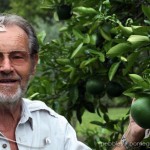
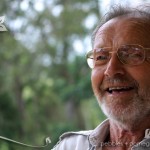
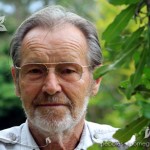
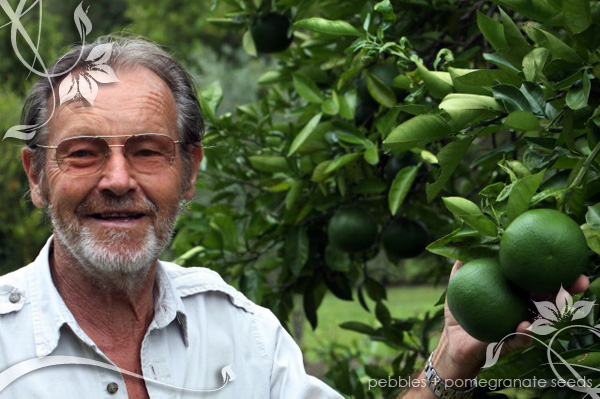
This would be the case of my father, Fred. The term ‘foodie’, to him would be as foreign as the concept; for him it just a way of life and always has been.
By definition, a foodie is ‘a person keenly interested in food especially eating or cooking’. Aren’t we all? In a sense we are, but for many of us, especially younger generations, it is a process of rediscovery, where as generations of that of my father’s, it was an ingrained upbringing.
My father grew up in a small village in Germany. It was post World War II and it was frugal times. His mother nurtured the most amazing vegetable patch to feed the family. Other provisions were either traded or purchased from local farmers; milk, cream, meat, etc. She churned her own butter, she smoked and preserved her own smallgoods in the chimney holds, baked her own sourdough bread from her own ‘starter’, fermented her own sauerkraut and pretty much could utilise every cut of meat to its greatest advantage – there was no waste. Food miles? Well, that simply wasn’t a consideration. Seasonal? That wasn’t either. If it was not seasonal and it was not within walking distance, it was not served for dinner on that or any other night. Self sufficiency? It was post-war, was there any other way? If you had enough land to grow any sort of produce you were considered well-off, and farmers, well they were the wealthy ones. How times have changed! Farmers these days question the viability of farming to a point that they are almost considered an endangered species.
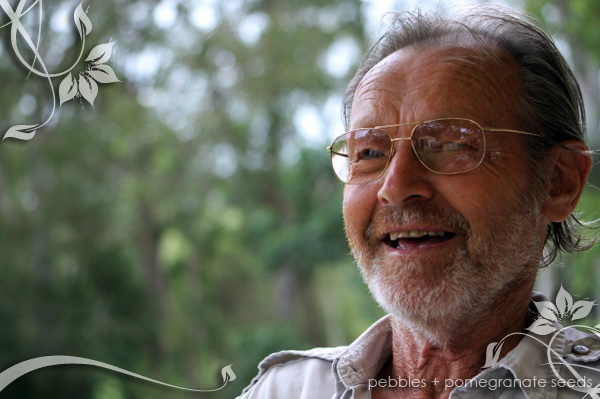
When my father turned 17, in pursuit of an adventure, he and a friend made the decision to migrate to the ‘lucky country’. His friend pulled out last minute and so my dad came to Australia by himself, with nothing other than a suitcase. He left his family, the family home of which he was the heir to, his job in the family mining business – everything. I would describe my dad as a great romantic. He was lured to Australia by the wide open spaces, the barren beauty of which Australia was portrayed in the early 1950’s and the freedom – Germany, while a free country is renowned for its regimented and disciplined lifestyle. He wanted opportunity and the freedom to make his own way in life, however that may be. While he forged a new life in Australia, one thing that remained with him was the food and his connection with the land.
When I was about 8 years old, due to the ill health of my mother, we moved to the King Valley in North East Victoria and took up residence in a dilapidated cottage that was on the property while he set about building the dream home on the side of the hill that overlooked the valley. The farm was nearly 400 acres, mainly bushland. Dad went about clearing the land into fertile farmland, and bringing the 4 acre neglected apple orchard back into production. In went copious amounts of vegetables, and along came chickens for eggs, as well as ducks, geese, sheep and cattle for meat.
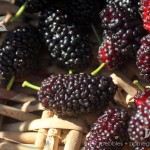
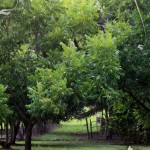
The farm was an abundant cornucopia of the most wondrous array of food. We collected mushrooms from under the pines; chanterelles, slippery jacks and field mushrooms – mum was the expert there. Dad would back the tractor trailer into the mounds of blackberry – which incidentally was considered a pest and pretty much covered the hillside, and we would emerge lips and hands stained with buckets of berries from which mum would make jams and jellies. We grew peaches, nectarines, cherries, oranges and about 10 different heritage varieties of apple as the orchard was about 20 years old. While the trees were in a dismal state when dad took over the property, within a year he had pruned them back and treated their ailments and restored them back to their former glory. The beauty of that orchard was, due to the large number of varieties, that the season was extended as the apples all ripened at different times. There was also this huge functional cool room on the property so the apples were preserved and pretty much lasted through until the next season.
One thing that I do remember quite distinctly is the intensity of flavour of an apple picked fresh from the tree – supermarket bought apples are nothing in comparison and the only apples that I have tasted here on the Sunshine Coast that would even come close is the apples from Stanthorpe that we occasionally see at the farmers’ markets. But that was pretty much the case throughout my childhood – food bursting with freshness and flavour.
While my family (mum, my brother and I) lived on the farm full time, we still needed an income. So my father made the decision to travel to Melbourne, which was a 3½ hour drive weekly so that keep could earn the upkeep. This is where I have such enormous admiration for my father. While we were extremely ungrateful children, I look back now and look at the sacrifices that my father made so that we could have a childhood filled with fresh healthy food. Every Monday morning at 4am, he would get up and make the 3½ hour journey to Melbourne.
My father was a Precision Grinder (specialist toolmaker – for trivia’s sake he actually made the prototype mould for the twisttop for stubbies). So he would turn up Monday morning, work until midnight, sleep in the back of his car in the factory, get up at 6am, work through until midnight again, up again at 6am, he would work through until about 4pm, when he would then hop in the car and make the 3½ hour journey back home to be with his family. If I am making my dad sound like a bit of a hero – well, as far as I am concerned, he is. What an amazing man. I look back now, and just think, wow, amazing! What energy and devotion to his family.
The work didn’t end there. The next morning he would be up at the crack of dawn, where he would then work on building the house, picking the fruit, tending to the vegie patch and then packing some fresh free range eggs and other farm produce, to take down to Melbourne the following week to a steady following of European co-workers that were hungry for fresh produce.
Meanwhile we would all be waiting back home for him to come home with the fresh deli goods that he would pick up from the Continental Delicatessen that he would pass on the way home; delicious lachs schinken and speck, leberwurst, mortadella, European cheeses (including one that smells like old socks and would totally stink out the fridge) lachs (smoked salmon), Bismarck herrings, olives, sundried tomatoes, sourdough bread – my mouth is watering just thinking about it.
While all of these things are pretty regular items to a foodie these days, back then, it was food that was only available in the most specialised of stores – which were nearly always owned by Europeans. I grew up on those foods and they became a great source of embarrassment when I pulled them out of my lunch box at school. At the time I used to wish that I had a vegemite or peanut butter sandwich on white bread, rather than leberwurst on sourdough rye!
Funnily enough, my own son absolutely loves these foods too. I guess it is just what you are used to. He would visit Opa (granddad) and the first thing he would do would be to slice up a slab of sourdough rye and pop some delicacy on it for him. Then again it wouldn’t even need to be a delicacy, sometimes it is just pork drippings with chives sprinkled on top. Some would be horrified at that thought, but if you have ever tried it you would think quite differently. We both grew up on foods like rabbit, venison, duck and geese as a main part of our diet. Sundays was our feast day. While mum cooked all week, dad would take on the laborious task of the Sunday roast for lunch which usually came accompanied by handmade knödel, which is a German potato dumpling, using a specialised cooking method, which I really must learn the secret of sometime soon.
We would also kill all of our own beasts, and it was all hands on deck. Dad would chop the chickens, ducks and geese’s heads off and then it was our job as kids to help pluck them. If we killed a cow or a sheep, it would hang in the cool room for a week (to rest) and then we would spend the day portioning up the meat – and we utilised every little scrap of meat, even the fat was rendered for use. We even had a go at making sausages using the gut as casing.
Thinking back I was quite a morose child. While I did always struggle with the actual putting to death, my dad was a stern man, and there was no room for silly behaviour – nobody likes the job of taking the life of an animal, so he would not tolerate any fuss. But once all life was gone, I was like a curious cat, and found cleaning out the intestines quite the entertaining job.
As time went on it became apparent to my dad that farming was indeed hard work, and that it was even harder to make a living on the land, especially the one that we were accustomed to. So after a number of years he made the decision to upgrade the farm. There was no money in apples – the orchard was not quite big enough to be considered viable, and there was much more money in beef cattle.
Interestingly the final prompter to sell the farm was that he could not get a commercial permit. Dad was forever the creator and the dreamer and he had turned one of the outbuildings into a pottery studio for my mum. The plan was to open a coffee shop in the outbuilding sell her pottery, jam, apples and other produce from the farm. However, he was always ahead of his time. What is now a prolific foodie region with coffee shops and cellar doors galore – but back then it was a totally foreign concept and the proposal was refused by council, so the property was put on the market and he bought a more fertile and more productive cattle property in Edi, still in the King Valley, but a few miles away.
Just as a matter of interest that property now belongs to Pizzini wines. While the apple orchard and beautiful cottage is no more, it has made way to progress in the name of the wine industry and is now the fertile growing slopes of Pizzini’s Sangiovese grapes.
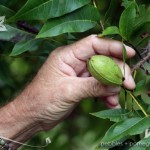
From there the story continues, until he decided to move to Queensland and try his hand at retail for a few years, until eventually the lure of the land brought him back to a farm in Kilkivan – north west of Gympie, cattle again. This foray was short lived as my mum’s returning ill health forced a reluctant sale and return to suburbia for treatment. My dad recently, at aged 77 bought 2.5 acres just east of Gympie – he has had enough of suburbia and wants a quiet life on the land. I am quite excited, as while it is only 2.5 acres it is filled with about 50 fruit and nut trees that he is going to lovingly bring back to life and I can’t wait for next year’s first harvest!
While I could go on and on, and this post is already epic, I think you get the gist. The point that I am trying to get across is that being a foodie is not about being this elite connoisseur of fine food. It is not about unusual and rare ingredients, or connected with any form of pretentiousness.
It is about loving food and loving the life that good food gives. It is about freshness, seasonality and the simple pleasure of enjoying what you eat. Savouring the moment, respecting the sacrifice – whether it be the effort through which it was created or the creation itself.
Regional foodies are simple people like my father. They see partaking in good food a necessity and a god given right not a treat reserved for special occasions.
I honour my father for the upbringing I have had, and I would not have it any other way, and neither should you…
… so, let’s all be regional foodies.
This post was written by Petra Frieser – Pebbles + Pomegranate Seeds
To find out more about the Sunshine Coast’s regional growers and producers visit: