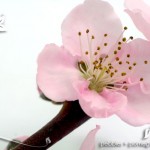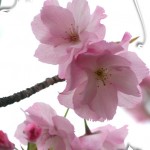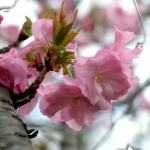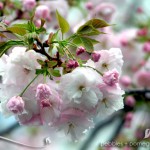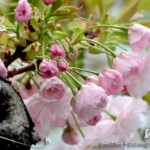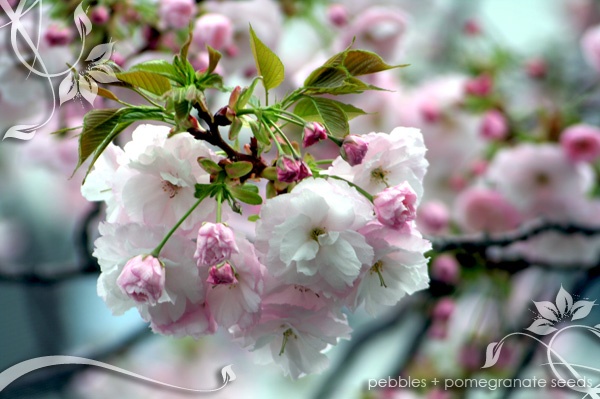
I love Japan, it a land of unsurpassable beauty. Everywhere you go, streets and laneways are lined with antique trees. Blossoming arches extend over entrances, courtyards are filled with solitary specimens gnarled and knotted by the elements, parks and gardens boast endless varieties, the prize of which may be showcased under a theatrical light display at night. Beneath these trees families and friends gather, some with quite elaborate dining set ups so that they can feast and fest well into the evening, all a part of their traditional ‘hanami’ (cherry blossom viewing).
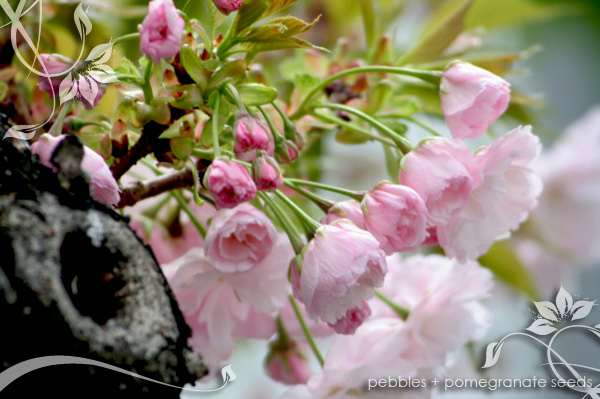
Interestingly, the cherry trees in Japan do not bear fruit, so the flowering is especially significant and stems from customs from the 7th century where aristocrats sat beneath them wondering at their beauty and immortalising them in poem and prose.
From a food perspective Japan is hard to beat as well. I had heard that Japan is an expensive place to travel, and while I am sure that if you chose to scour the designer districts, this would be very much the case, but on a whole I found Japan to be extremely inexpensive and especially so from a dining perspective. The food is fresh and seasonal and while you could be forgiven for thinking that it consists of multiple versions of sushi, Japanese cuisine is so much more than that.
The most difficult part of travelling through Japan is the language. Very few people speak English, however, that does not stop Japan from being the most hospitable nation that I have ever had the pleasure of travelling through. My travel buddy and my own grasp of Japanese extended to hello, thank you and goodbye and as far as deciphering Japanese characters, well, we were seriously impaired. So we had great appreciation for the countless strangers that would painstakingly try their skills at English and then point or wave hands or even deliver us personally to our destinations. We never felt lost (although we were many times) and we always felt safe and welcome.
We began our journey in Osaka, then took the bullet train to Kyoto and then on to Tokyo. Japan has so much to see and their incredibly efficient rail system makes travelling easy, quick and assessable. As two foodies travelling together, food was of course the ultimate priority. We wanted to experience everything but there are some things that the guide books just don’t prepare you for. Japan is a very sophisticated nation when it comes to culture and tradition, it is a land filled with mysteries and mythology – this can also be said of their eating places. While with Western eateries you are left in no doubt about where they are and what they serve by their ample signage and visual paraphernalia, Japan’s eateries are more discreet and definitely err on the mysterious. On our first day in Japan we came very close to starving to death in search of a restaurant where we could indulge in our maiden Japanese meal. What was confounding was constantly being faced with the front of what may have been the exquisitely styled entrance of a restaurant, but then, maybe this was the entrance to somebody’s home and if we pushed our way through those shoji screen doors there was the possibility of finding ourselves in the middle of someone else’s living room!
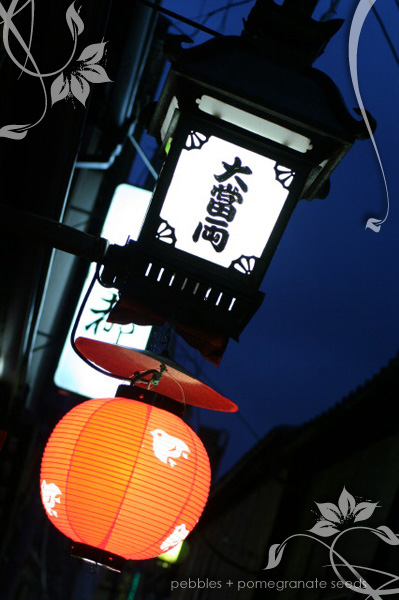
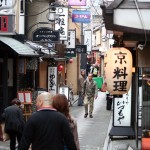
There are rarely signs, and even rarer, in legible English. The entrances are largely unadorned and we simply lacked the courage to push our way through to find out. There are usually lanterns which are supporting evidence that there may be a dining establishment within, but if it is your first day, you can’t read or speak Japanese and you are deliriously hungry, the lanterns do little to inspire confidence. Fortunately hunger triumphed and we found ourselves in a restaurant that served a superb fresh selection of sashimi and some fabulous chilled saki that went down a treat after hours of indecision and mustering up of courage.
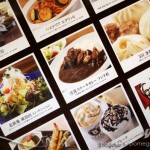
Of course this is quite the contrary in the major tourist strips, the signage almost overwhelming. I couldn’t help being amused by the plastic replicas of each dish that featured in most windows. The intricacy and detail of these replicas are quite astounding and while you can’t really go wrong as far as food in Japan, we wanted a more traditional, even if it was a somewhat more mysterious, dining experience. Once you get over that initial trepidation, bursting through those entrances became easy.
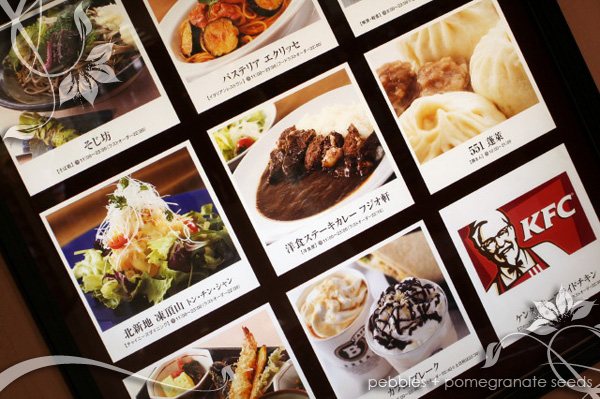
Another source of amusement was the penchant for vending machines in traditional cafés – the Japanese equivalent of fast food, even though there is no shortage of KFC’s, McDonald’s and Starbucks. You could buy whole set menus through these vending machines. I must say I was somewhat perplexed at first, wondering how on earth these machines were going to dispense the food and was ultimately relieved to find that there was a waitress who would do everything but help you with the order – the area that we needed the most help with. This made me wonder why the vending machine at all? Maybe regular diners are just more adept than what we were although I am sure observers were equally amused by watching two clumsy Westerners work out the intricacies of this modern piece of technology.
Kyoto was by far my overall favourite destination. It is a city of incredible beauty where there is a seamless blend of the modern and the traditional. It is a city where you can walk straight from the chaos of a busy street into the spiritual quietude of an immaculately trimmed garden full of symbolism and subtle meaning. There is so much to see but there are a few simple ‘must dos’ when visiting Kyoto.
1. You must walk The Philosopher’s Walk during the cherry blossom season when it is at its most striking (and make sure you buy a cherry blossom ice cream to start you on the way). Depending on where you are staying, make your way to Ginkakuji (Silver Pavilion) and start from there. The walk winds along a cherry tree lined canal and is a favourite the path taken by Nishida Kitaro a famous Japanese philosopher, who would ponder philosophical matters upon his journey. The beauty, impossible to describe, the walk, if nothing else, leaves you feeling quite peaceful, even philosophical…
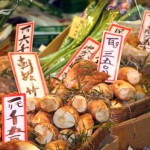
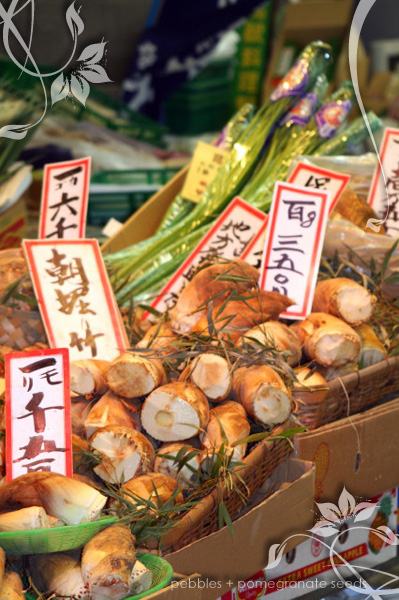
2. Visit the Nishiki Ichiba Food Market. If you are a foodie and there is only one thing that you do in Kyoto, this would be it. This 400 year old arcade of all things food is the definitive foodie experience. In the 400 meters of wall to wall stalls you will find everything imaginable; sea cucumbers and various other unidentifiable sea creatures, sweet rice cakes, pickled vegetables of every conceivable variety and hue, traditional Japanese knives, delicate handmade lollies that look almost too pretty to eat. While as a tourist you may only splurge on some bamboo serving ware, chopsticks or some of their fabulously packaged sweets, it is something that needs to be seen and if you are anything like me you will want to appease your curiosity by trying at least some of the more unusual offerings.
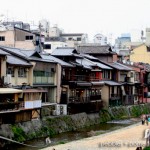
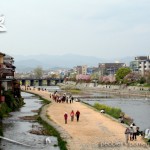
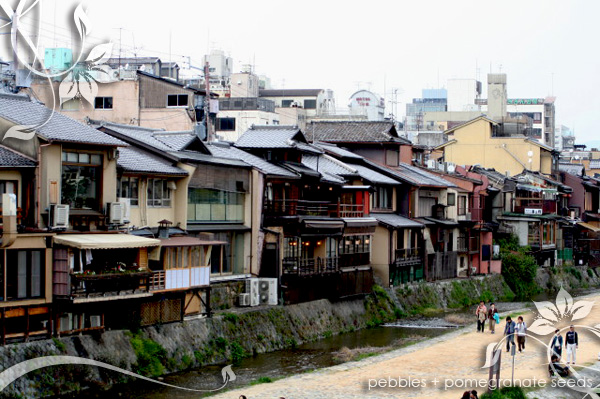
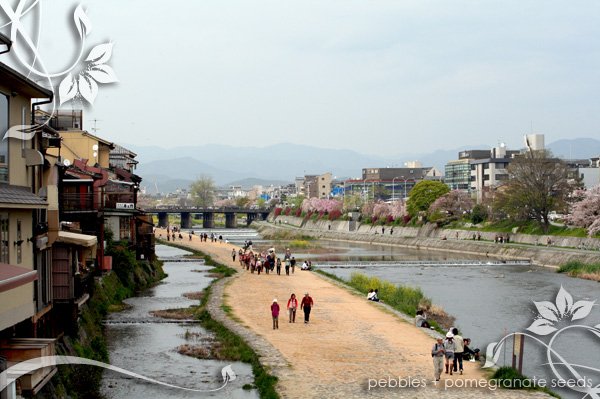
3. Dine in the Pontocho district. The Pontocho district runs parallel to the Kamo-gawa River with many of the restaurants overseeing this beautiful waterway. It is a narrow laneway laced with many traditional establishments the secret delicacies that lie beyond the shoji doors anyone’s guess. While many restaurants do display menus at the entrance, only some are in English. While the choices are limitless in this seductive little alley, the less information that you find on the entry the more intriguingly traditional your dining experience is likely to be.
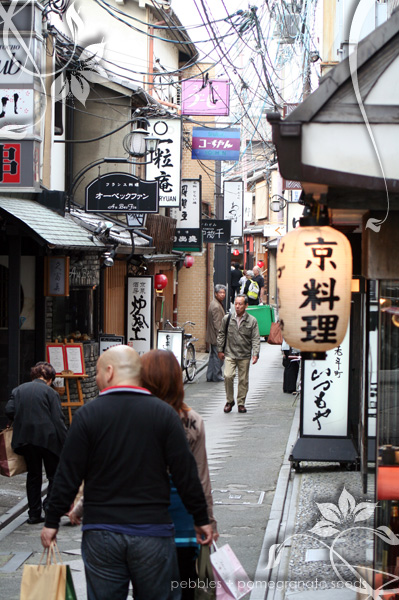
4. Stroll through the Gion district. The Gion district is renowned for its history as the Geisha district of Kyoto, portrayed so seductively in the movie and book, Memoirs of a Geisha. Little appears to have changed in this district of teahouses, the streets timeless and preserved in culture and tradition and occasionally you will still see Geisha strolling on the streets of Gion, especially in the evenings. The teahouses are quite expensive in this district, but if you are going to partake in a traditional tea ceremony then this is the place to do it as you are assured that it couldn’t be a more authentic experience.
Kyoto is so much more than just these few destinations. Leave yourself plenty of time to explore the bamboo groves, the waterways, the many temples, shrines and gardens and of course to shop – there are lots of great shops.
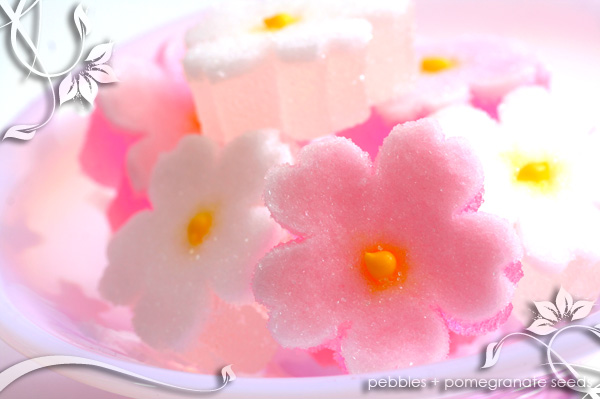
In Kyoto you will find lots of tasteful traditionally made gifts that truly reflect Japan without being tacky. However a small word of warning; throughout Kyoto’s main tourist strip you will come across dozens of shops that sell wafer-like glutinous sweets that are gloriously packaged. While it is hard to refrain from purchasing these for their visual appeal, I must confess I was quite disappointed by their taste, but try them just the same. It is all part of the experience.
There is so much to see in Japan, even more to taste, and while Kyoto is just a sample of the magnificence of Japan, it is definitely one of the jewels in the foodie crown. Be daring and try things on the menu that you are unfamiliar with. I can recommend the ‘point and nod’ method. We had fun selecting our mystery meals and found all of our waiters to be patient and obliging and by the time we left the establishments we had broken through even the most reserved of exteriors. I couldn’t help thinking that the chef that recommended the saki at the restaurant on our last night in Japan had an amused glint in his eye watching us two girls grapple with our menu and further still with our meals and a little too much of his recommended saki, but it was memorable in a way that made us reluctant to come home and had me eating with chopstick for weeks after I got home! I can’t wait to go again.
This post was written by Petra Frieser – Pebbles + Pomegranate Seeds