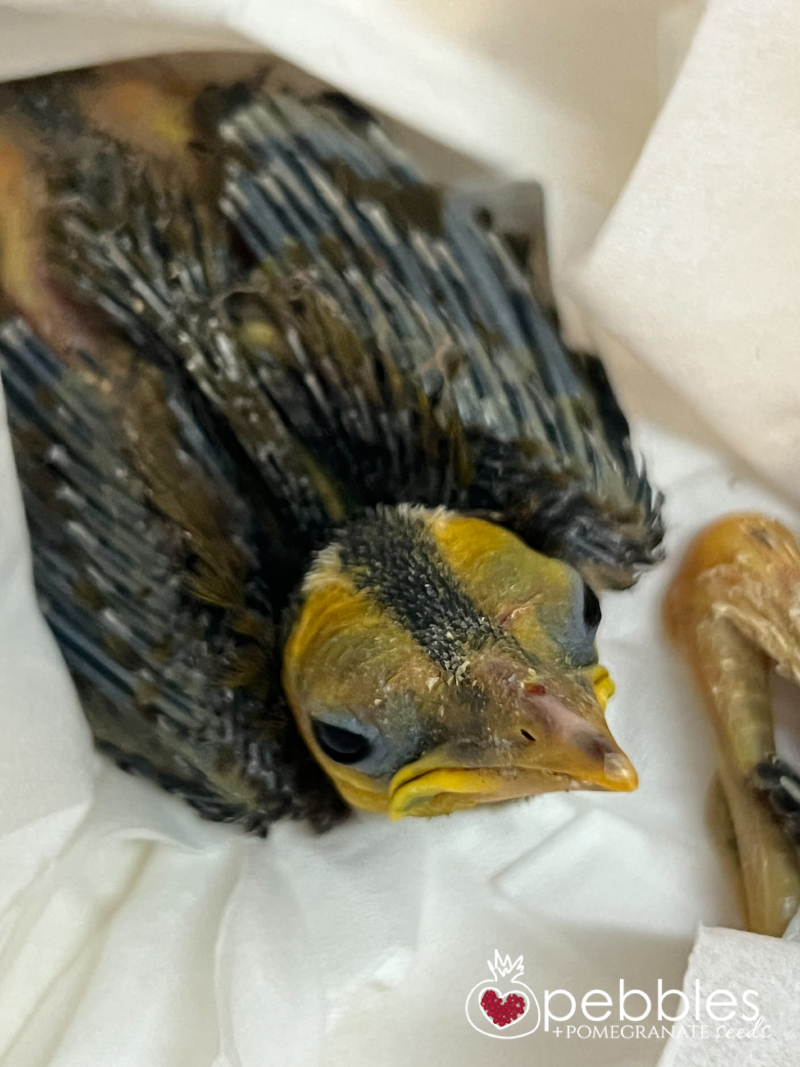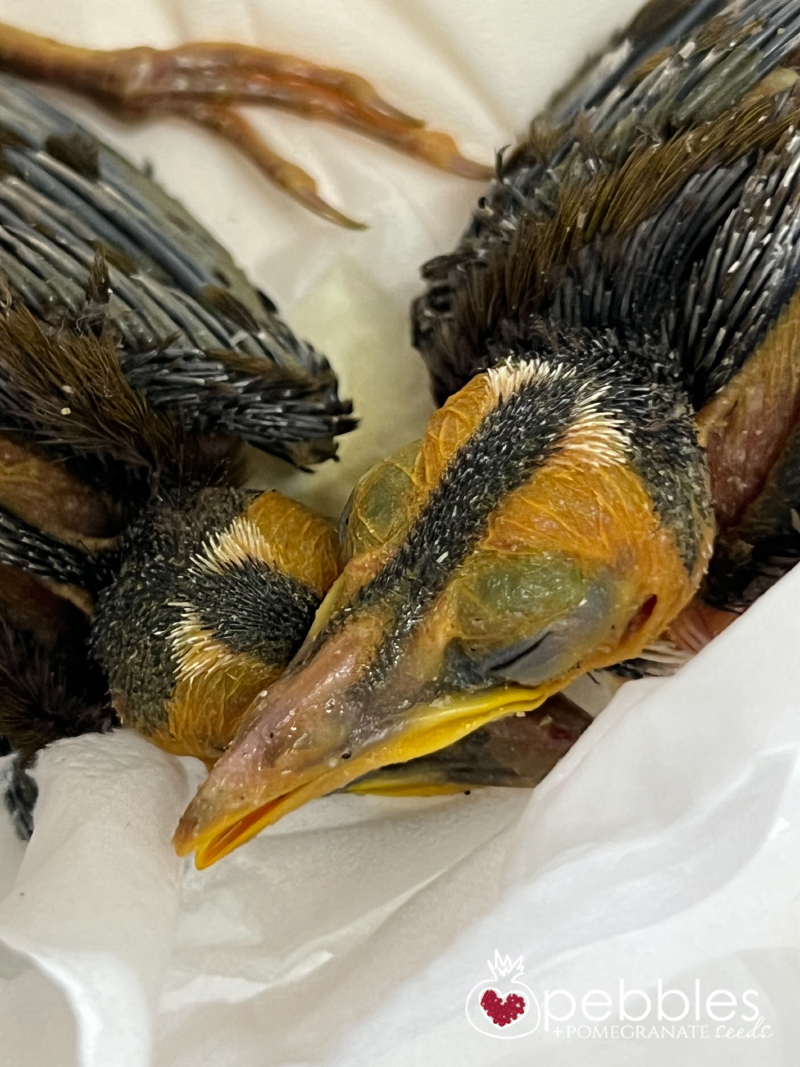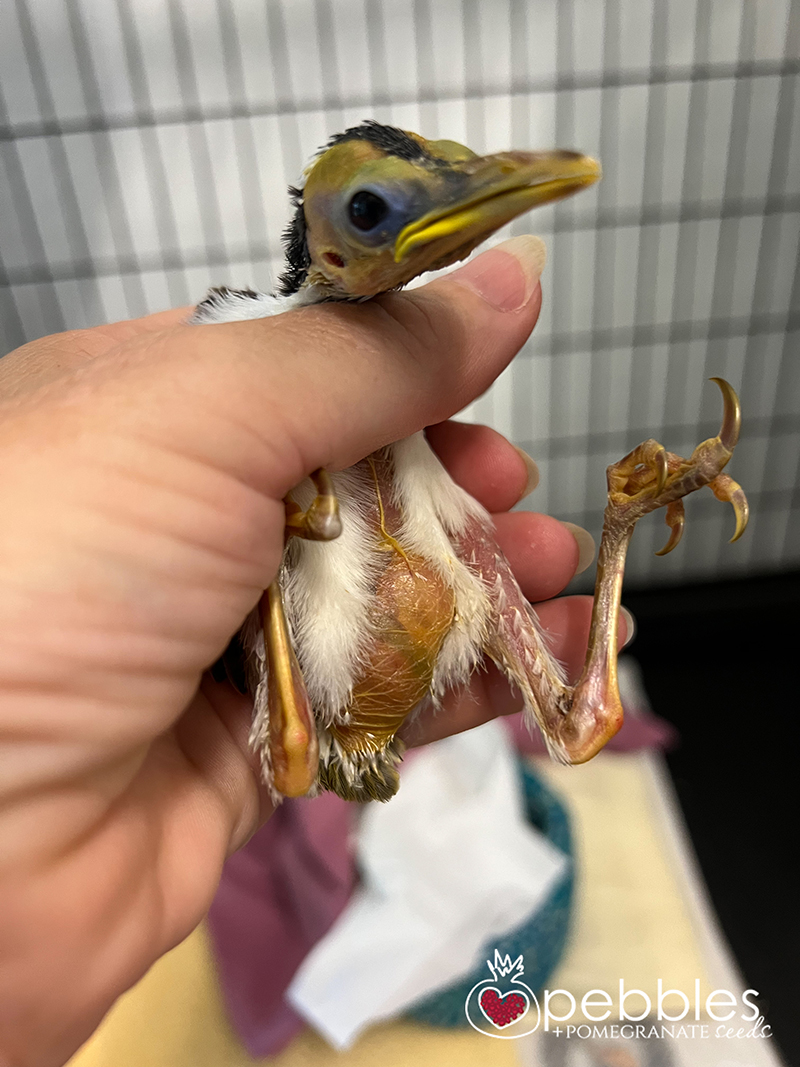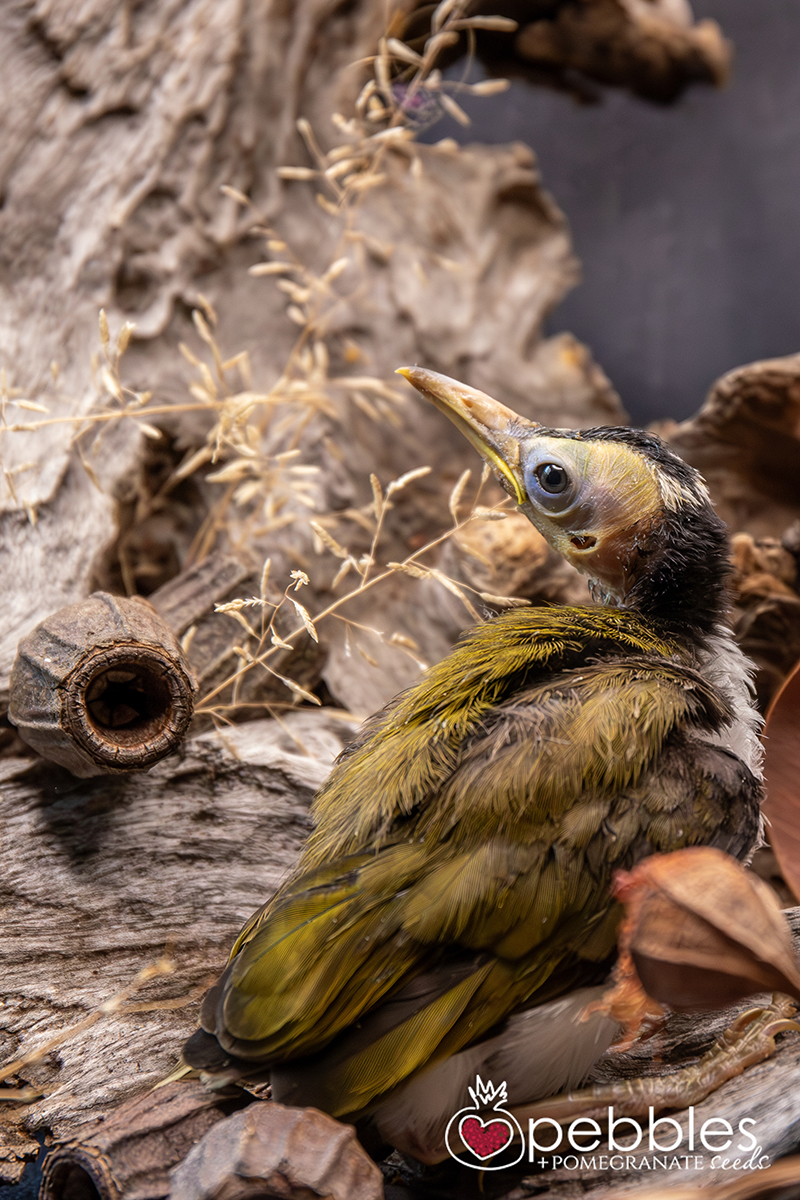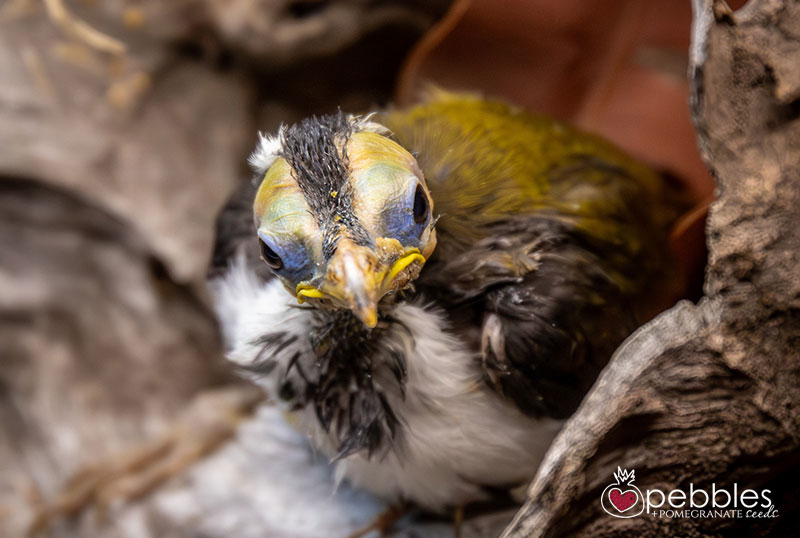
Edward. What a darling. Edward was my little White-quilled Honeyeater rescue. His nest was found in the trailer when it was being emptied at the tip after some landscaping works, and he was just adorable.
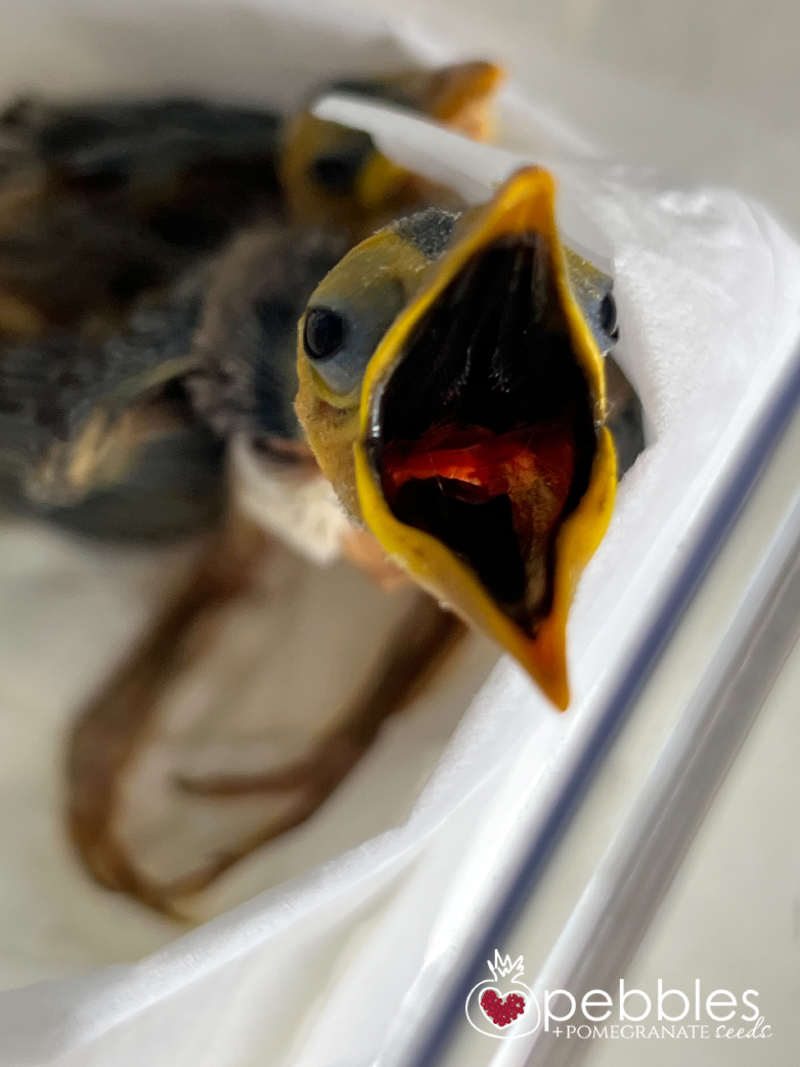
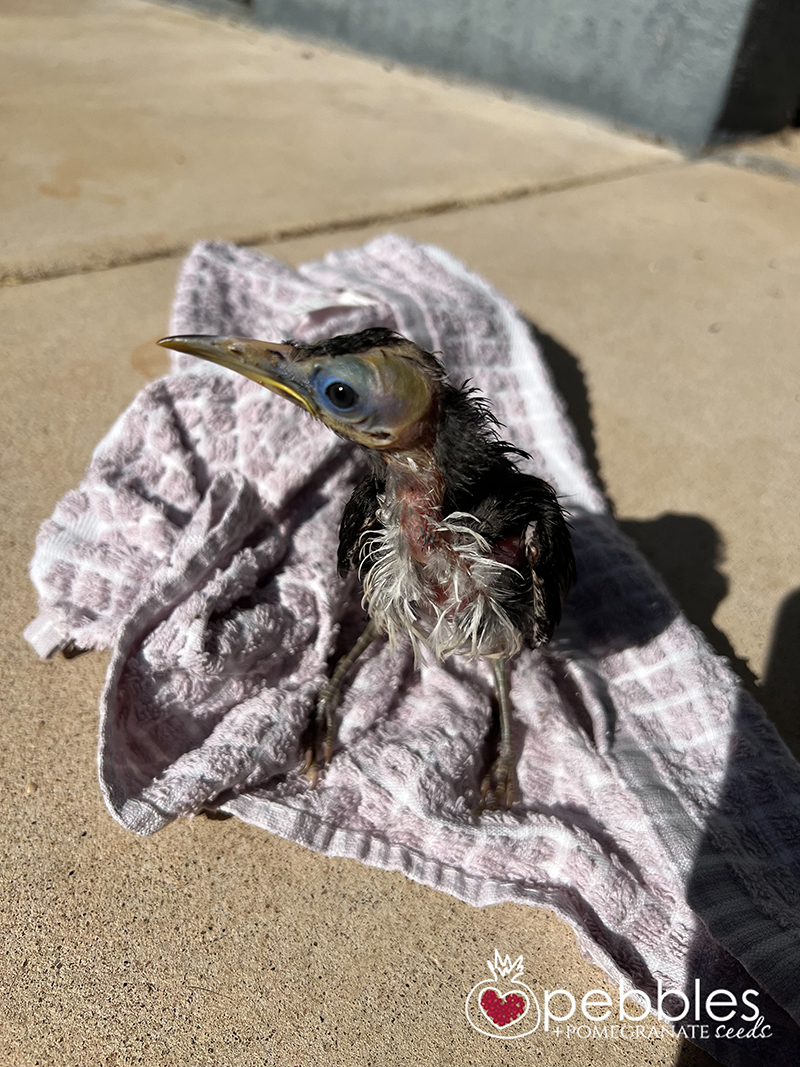
However, it started off with two, Edward and Albert. I remember picking them up from the vet, and they were just tiny little creatures, their body covered in pinfeathers, and their mouths wide open, begging for food. I also remember being taken a little bit aback by how demanding (and fugly) they were, thinking, “Gosh, what am I going to do with these little guys?” But it didn’t take long for me to fall in love with them.
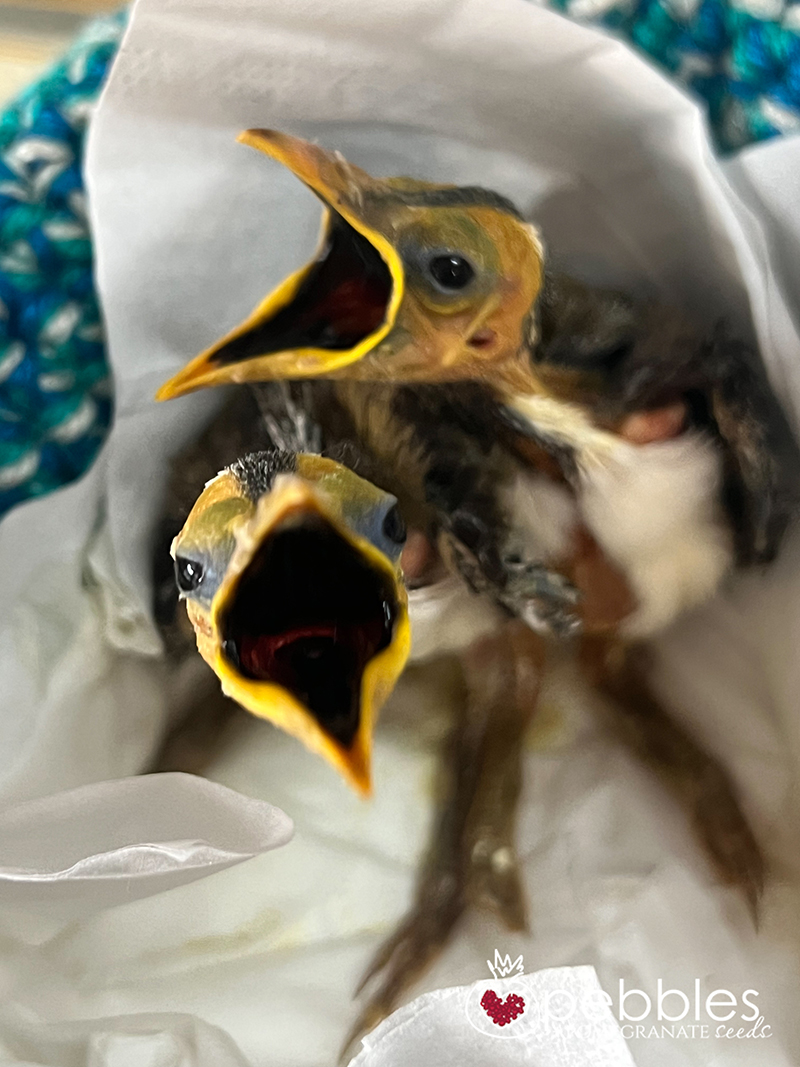
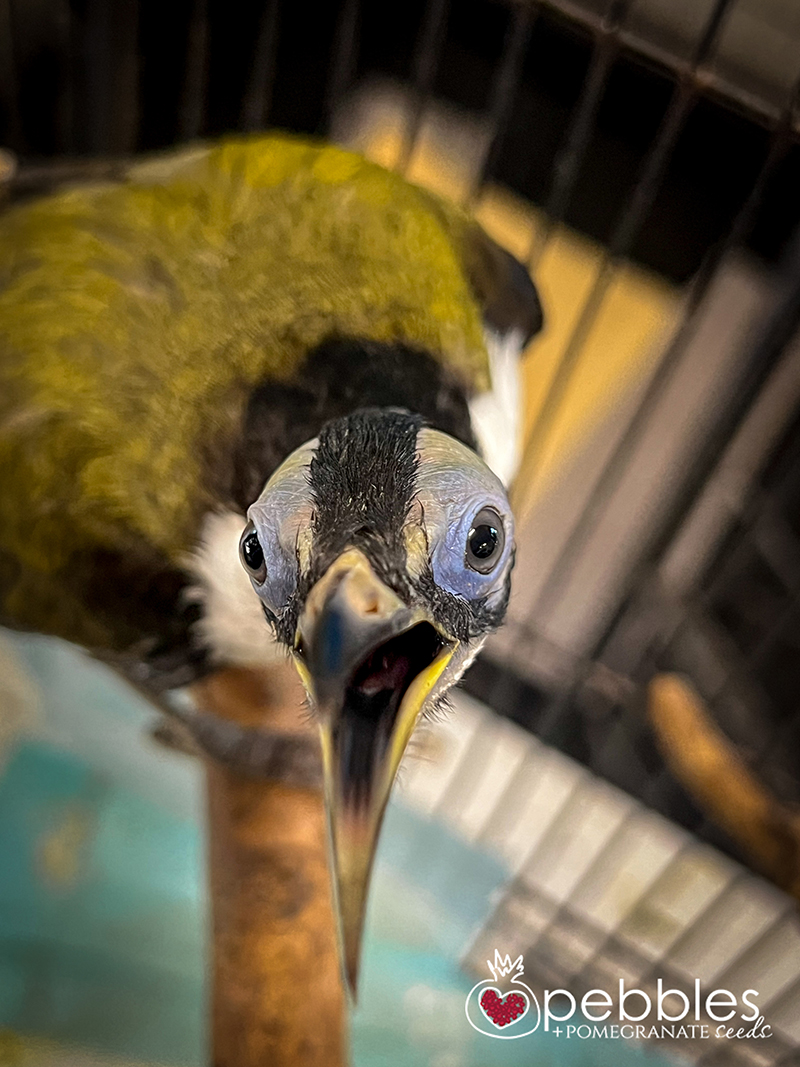
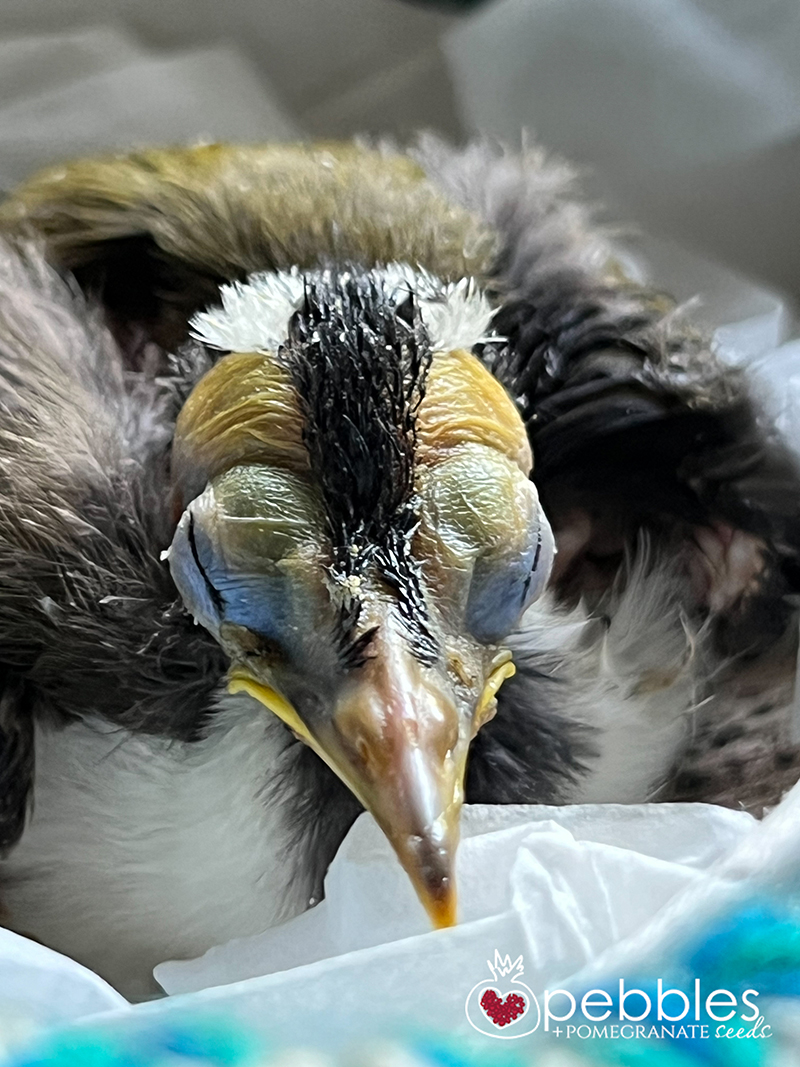
White-quilled honeyeater (and Blue-faced Honeyeater) chicks are distinguished by their black throat so when they’re begging for food there’s no doubt as to what type of honeyeater they are. The adults have the blue faces of their (once) namesake, but when young, they are more of a metallic green. Having said that, because I am in the Top End, recently, the subspecies of Blue-faced Honeyeater in this region was elevated to a species of its own, so my little Blue-faced Honeyeater is actually a White-quilled Honeyeater. But I am still getting used to calling him that, and so are all the birding guides and apps.
It’s always touch-and-go for the first few days. You never quite know whether they’re injured. Even though they have been health-checked by a vet, it is not always apparent. Then the change in diet, environment, shock and just all the changes from being out of their natural wild state, all factors into it. It’s such a fine line to get it right, so at first, they thrived, but then after a couple of days, I could see Albert was becoming quieter and losing energy. You never know if it’s something that you’re doing wrong or whether there is a pre-existing injury, and when there’s a loss, it doesn’t matter the reason; you still feel it. You always wish that you could’ve done more.
So on about the fourth day, poor little Albert died. Edward was going strong, but he appeared to decline as well. They’re so tiny, so when you handle them, even though you think you’re getting it right, it is so easy to get it wrong. I remember holding little Edward in my hand; I actually thought he was going to die. He was listless, and when I have a little one, I can see they’re on the way out. I usually just hold them to me and give them warmth and comfort and let them know that they were loved, at least by me.
It’s probably meaningless to them, but it’s just what I do, so I remember holding little Edward to my chest while I was doing work, and then it got to a point where it felt like he’d stopped breathing. He was quiet. I couldn’t feel his heartbeat and I thought that’s it.
Then suddenly he took a little breath and perked up and then just vigorously demanded food, and from there on he was an energetic little dynamo. I don’t know what happened to change, but I was so thrilled that I didn’t care the reason.
The next few months were so entertaining. They are such little characters. When raising a rescue, you try not to make them too reliant on you, but unfortunately, there’s no real way around it. When you’re having to feed these tiny little creatures, you can’t help but handle them, so they do become attached to you, and some of the interactions are just adorable.
Edward loved his honeyeater syrup and his fruit. Grapes, especially, but you need to get to a point where you transition them to feed for themselves, which is not always easy because you’re not like a bird that is showing them by example. Fledging is another thing; I had to simulate that in my own way and encourage him to strengthen his wings. I would wave him up and down as he perched on my hand so he’d get that uplift draft in his wings. I’d been watching videos about young eagles, how they strengthened their wings from within the nest. There is a lot of observation and experimentation that goes on!
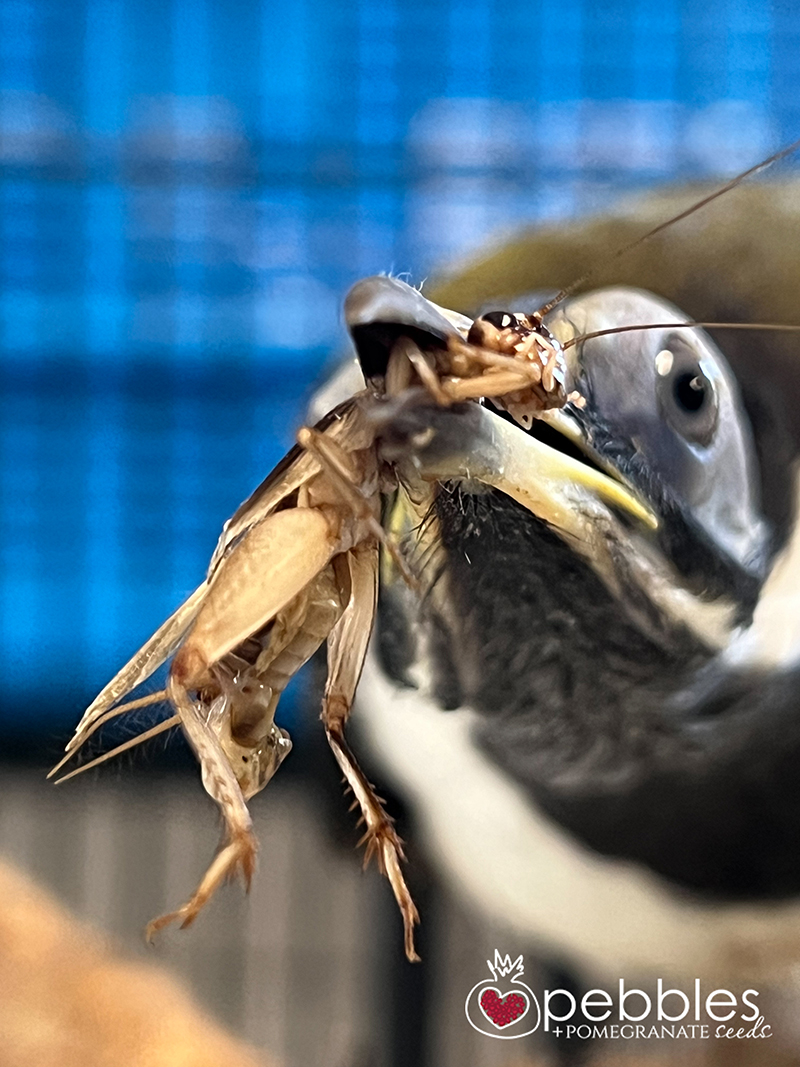
I had also observed, in the wild, that Blue-faced Honeyeaters are very much a community bird. So, when they are raising their young, it’s not uncommon for a previous clutch to help feed the next generation. I would watch them catch a caterpillar and beat it against a tree branch and then feed it to them – again, I tried to emulate this by bashing a grub against the perch and then pop it into Edward’s mouth.
It’s funny watching them grow and adapt their habits. At first, I would have to put the food right down his throat, but as Edward became more independent, he wanted to inspect his food before he ate it. That first proud moment when he took it from me bashed it all by himself!
It’s also amazing how instinctive they are. Without any introduction, Edward knew that flowers were food. Instantly, he deep-dived into the flowers with his beak. He was a bit clumsy at first, but it didn’t take him long to zip from one flower to another, pollen dusting all over his little face.
Of course, they get to a point where you need to prepare them for release, which comes with its own set of anxieties. Are they ready? Will they survive? Where should they be released?
I’m in a suburban environment, so I am limited as to what I can release in my area. White-quilled honeyeaters are a community bird, so they need to be released where there are others. While ideally, they are released in the rescue locations they are found, those locations are not always suitable: too populated, dogs, traffic, etc. It is fine for a bird that has grown up in that environment but rescues usually lack the street smarts that are instinctive if born to that environment.
So sometimes there is a transition period. In Edward’s instance, he was taken to a colleague for pre-release with other White-quilled Honeyeaters. But first, he was placed in a much larger aviary to allow him to spread his wings and strengthen them before his big day.
There are interesting little moments in between where nature always has a special little magic to observe. With Edward, it was his interactions with Ludwig, a Red-collared Lorikeet with paralysis syndrome, who was convalescing at the same time he was in my care.
They were next to each other in a cage and became unlikely friends. Ludwig learned from Edward how to take food from me (initially, he wasn’t strong enough to feed himself), while Edward also learned from Ludwig. It was a really interesting dynamic.
We relocated them at the same time and into the same aviary, and they became best buddies. When it came to release time, this meant that neither of them wanted to leave, so their release was delayed some time, until one day, without notice, Edward flew away without looking back.
It’s always a joy when they fly free, but it is bittersweet. You worry for them that they’re okay and in the wild and that they found their little tribe, but you never really know. Regardless, it is an absolute joy to be part of their journey and to know that he is back in the wild, like he is supposed to be.
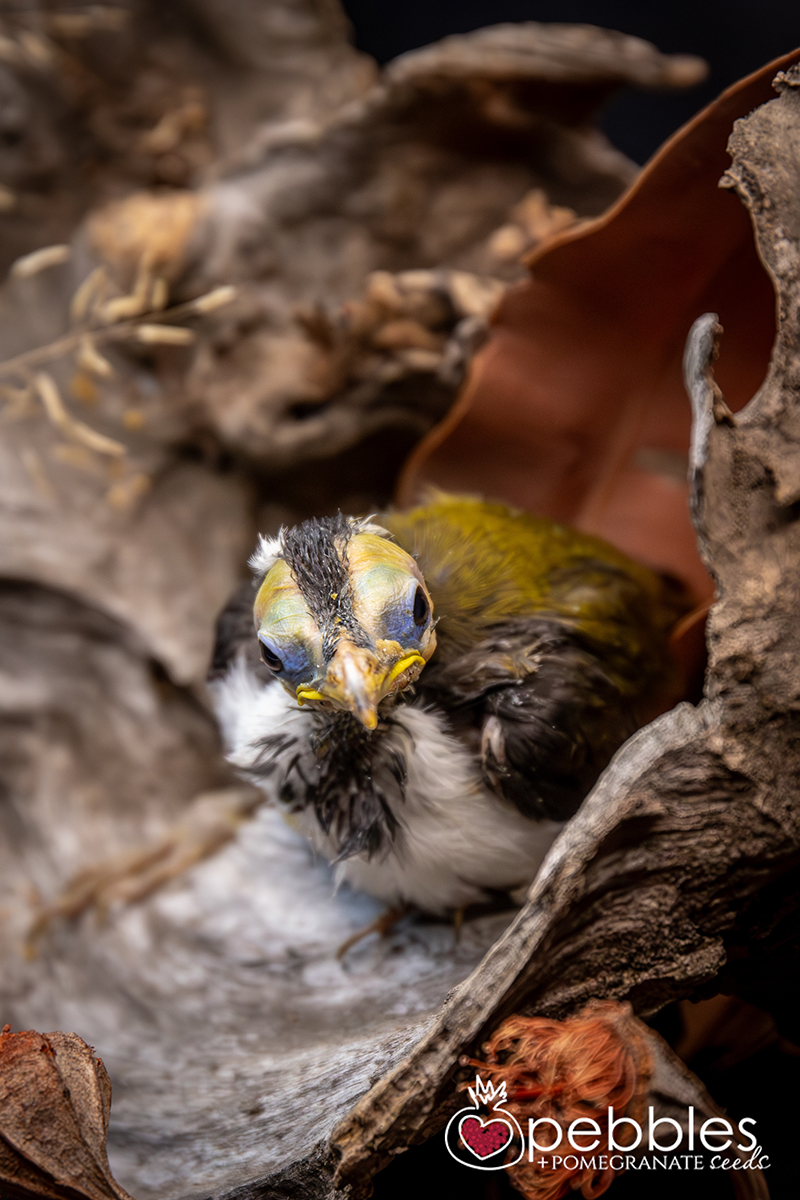
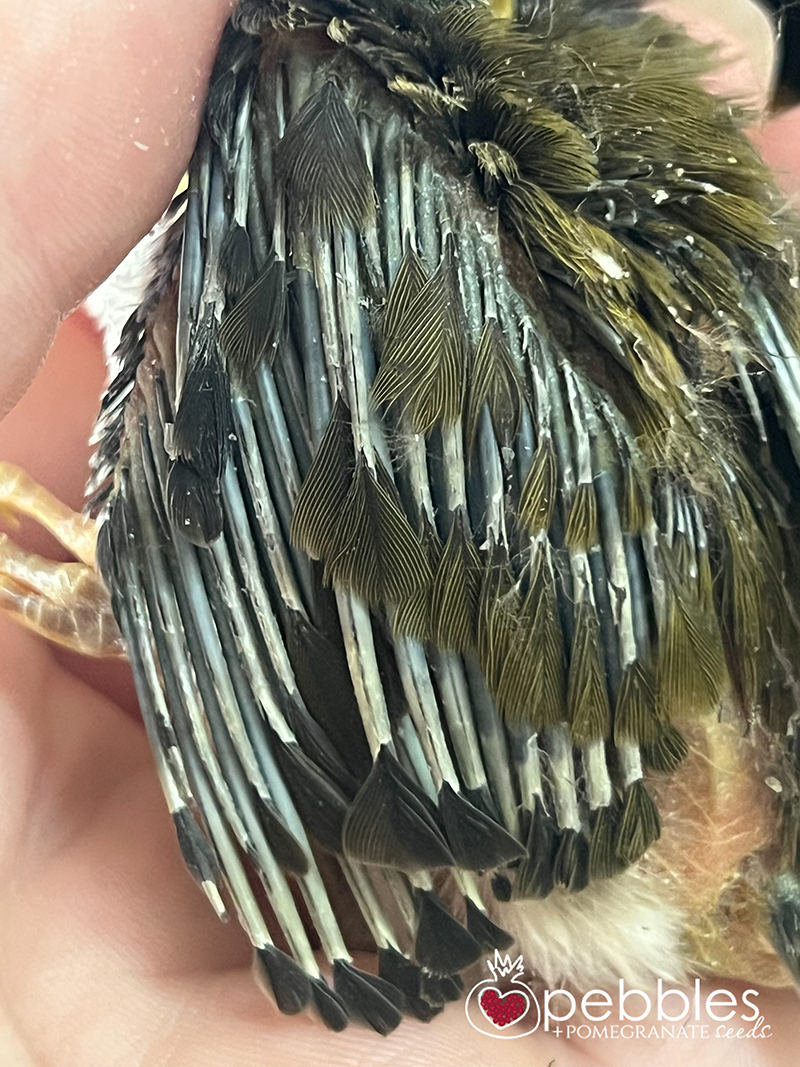
Looking through photographs and videos as he was transitioning into adulthood provided a few giggles. There were a few periods when he was quite the fugly. He was an extremely messy eater – he got the sticky syrup all over himself! Nothing a little bathtime didn’t fix, but it resulted in a bit of a gawky period while his new feathers came through. To me, he was always beautiful.
This story was written by Petra Hughes – Pebbles + Pomegranate Seeds
Photographs (iphone) by Petra Hughes – © Copyright 2026 – All rights reserved.
Images may not be reproduced, downloaded or used without written permission from the copyright holder.